
Bottled Water vs. Tap Water vs. Reverse Osmosis: Which Makes Sense for Your Home?
Bottled water, public tap water, and point-of-use reverse osmosis can all provide drinking water, but they differ in regulation, transparency, cost, convenience, taste, maintenance, and waste.
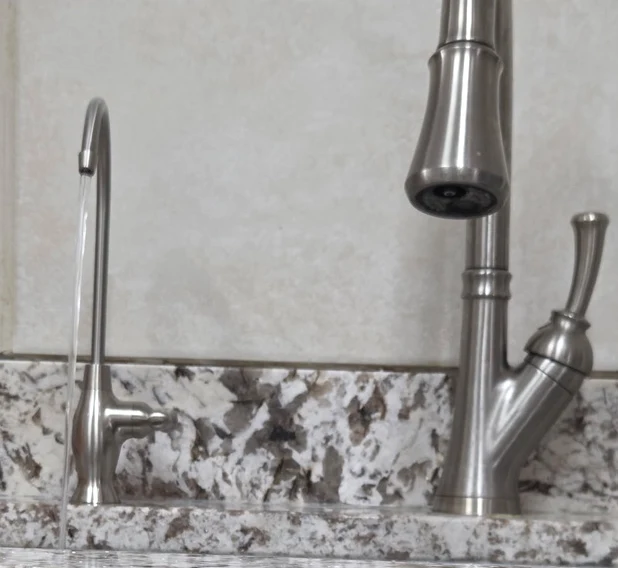
The best choice depends on your water and what you want to improve. Read your utility report, consider why you buy bottled water, and check the performance documentation for any system you’re comparing.
For many Central Florida households, an under-sink system offers a way to get the drinking water they want without buying and carrying cases every week. The system still needs regular maintenance.
Who regulates each option?
Public tap water
EPA regulates public drinking-water systems under the Safe Drinking Water Act. Utilities must test for regulated contaminants, meet applicable standards, notify customers of violations, and provide an annual Consumer Confidence Report.
The report explains the water source, treatment, detected contaminants, compliance, and other required information. It does not describe every substance that modern instruments can measure, and it does not test the plumbing inside a specific home.
Bottled water
FDA regulates bottled water as a packaged food product. Bottlers must follow standards of identity, quality standards, and current good manufacturing practices.
Some bottled water comes from springs or wells. Some begins as municipal water and is treated by reverse osmosis, distillation, filtration, ozonation, or another process before bottling. "Purified water" describes treatment; it does not necessarily describe a unique natural source. (FDA bottled-water overview)
Home reverse osmosis
A home RO system is consumer equipment. Its performance depends on the exact model, installation, feed-water conditions, pressure, membrane, pretreatment, storage tank, and maintenance.
NSF/ANSI 58 is the principal certification standard for point-of-use RO systems. Certification and reduction claims must be verified for the exact model.
Compare the three options
| Question | Public tap water | Bottled water | Point-of-use RO |
|---|---|---|---|
| Primary regulator | EPA and state drinking-water authorities | FDA | Product standards, plumbing codes, and third-party certification where applicable |
| Public data | Annual utility report and notices | Label and manufacturer information; detailed lot data may be limited | Certification listing and manufacturer performance sheet |
| Ongoing household work | Read report; maintain plumbing and any filters | Buy, transport, store, and recycle or discard bottles | Replace filters and membrane; sanitize and service as required |
| Cost pattern | Included in utility service | Repeated per-container cost | Upfront equipment plus cartridges, membrane, water, and service |
| Taste | Depends on source, treatment, disinfectant, and plumbing | Varies by source and treatment | Often lower dissolved solids and carbon-polished taste |
| Emergency use | May be interrupted or subject to a boil-water notice | Useful when safely stored and within emergency guidance | Requires water pressure and may not operate during a service interruption |
| Waste | Utility infrastructure impacts | Packaging and transportation | Concentrate water and replacement cartridges |
Is bottled water cleaner than tap water?
Not as a universal rule.
A bottled product may have a taste the household prefers and may be treated by RO or distillation. It can also come from a municipal source. Public tap water provides an annual report and continuous distribution, while bottled-water information can be more brand- and lot-specific.
FDA's 2023-2024 bottled-water survey tested 197 samples for 18 PFAS. Ten samples had detectable PFAS, and none of the detected levels would have exceeded EPA's public-water maximum contaminant levels if those limits applied. That survey is reassuring in one respect, but it does not mean every bottle is PFAS-free or that a brand will never change. (FDA PFAS bottled-water results)
What about microplastics?
A 2024 study of three popular bottled-water brands found an average of about 240,000 micro- and nanoplastic particles per liter using a new imaging method. About 90 percent were nanoplastics.
It was a small three-brand study, not a universal test of every bottled product. It does show why packaging and processing should be part of the conversation rather than assuming a sealed bottle is automatically particle-free. (NIH study summary)
Microplastics have also been reported in tap-water research. Measurement methods are still being standardized, so simple brand-versus-tap rankings are not scientifically sound.
When bottled water is useful
Bottled water remains valuable for:
- Emergency storage
- Boil-water notices when authorities recommend it
- Travel
- Temporary service interruptions
- Locations without a reliable safe supply
- Specific medical or disaster guidance
Follow emergency-management guidance for storage, rotation, and container safety. Do not reuse damaged single-use bottles indefinitely or store them in extreme heat.
When a point-of-use RO system makes sense
RO may be a practical everyday option when the household wants:
- A consistent drinking-water taste at home
- Lower total dissolved solids
- Reduction of specific contaminants supported by certification
- Less dependence on cases of bottled water
- A dedicated faucet for drinking and cooking
The decision should include annual cartridge and membrane cost, the amount of reject water, available cabinet space, pressure, and service.
RO is not maintenance-free
A neglected system can lose flow or performance. Required tasks may include:
- Prefilter replacement
- Carbon postfilter replacement
- Membrane replacement
- Tank-pressure check
- Sanitization
- Leak inspection
- Verification of performance
A system should not be sold as a lifetime appliance with no consumables.
When ordinary tap water may be the best answer
A household may review the utility report, like the taste, have no property-specific concern, and decide that no additional treatment is necessary.
Home treatment is a choice, not proof that municipal water is unsafe. Central Florida utilities must meet public drinking-water requirements. Homeowners often seek treatment for hardness, disinfectant taste, spotting, or a drinking-water preference rather than a violation.
How to compare cost honestly
For bottled water, calculate:
- Containers purchased per week
- Price per case or delivery
- Annual delivery fees
- Fuel or time to transport it
- Refrigerator or dispenser rental
- Storage and disposal
For RO, calculate:
- Installed cost
- Annual cartridges
- Membrane replacement
- Service
- Reject water
- Electricity if a pump is used
- Expected useful life
Then compare the volume of drinking water the household actually consumes. Avoid sales calculations that use an inflated bottled-water assumption or ignore RO maintenance.
A simple way to choose
- Identify the utility and read its latest water-quality report.
- Decide whether the issue is taste, hardness, a verified contaminant, or convenience.
- Use whole-home equipment for whole-home goals and point-of-use equipment for drinking-water goals.
- Verify the exact product certification.
- Keep stored bottled water for emergencies even when using tap or RO day to day.
- Maintain the chosen system.
Frequently asked questions
Is bottled water just tap water?
Some bottled water comes from municipal sources and is further treated. Other products come from springs, wells, or artesian sources. The label category and bottler information provide context.
Is RO water completely pure?
No treatment produces an absolute guarantee of zero substances. RO performance is model- and contaminant-specific and depends on maintenance and operating conditions.
Is bottled water safer during a boil-water notice?
Authorities often recommend commercially bottled water or properly boiled water during a notice. Follow the utility or health department's instructions because the cause and affected uses can differ.
Does RO remove chlorine?
The carbon prefilters in many RO systems reduce chlorine to protect the membrane and improve taste. Chloramine treatment requires compatible media and sufficient capacity.
Should I stop buying bottled water completely?
That is a household choice. Many families use RO or filtered tap water day to day and keep a separate emergency supply.
Official sources
- FDA - Bottled Water Everywhere: Keeping It Safe
- FDA - PFAS Testing Results for Bottled Water
- NIH - Plastic Particles in Bottled Water
- CDC - How to Read Drinking Water Quality Reports
- NSF - Reverse Osmosis Drinking Water Treatment Systems
About this guide: Utility programs, regulations and equipment specifications can change. Treatment performance depends on the water, system design, certified reduction claims and maintenance.