
Pharmaceuticals in Drinking Water: What Trace Detections Mean for Florida Homeowners
Modern laboratory instruments can detect pharmaceuticals in water at extremely low concentrations. That capability has led to headlines about medications in rivers, groundwater, source water, and occasionally treated drinking water.
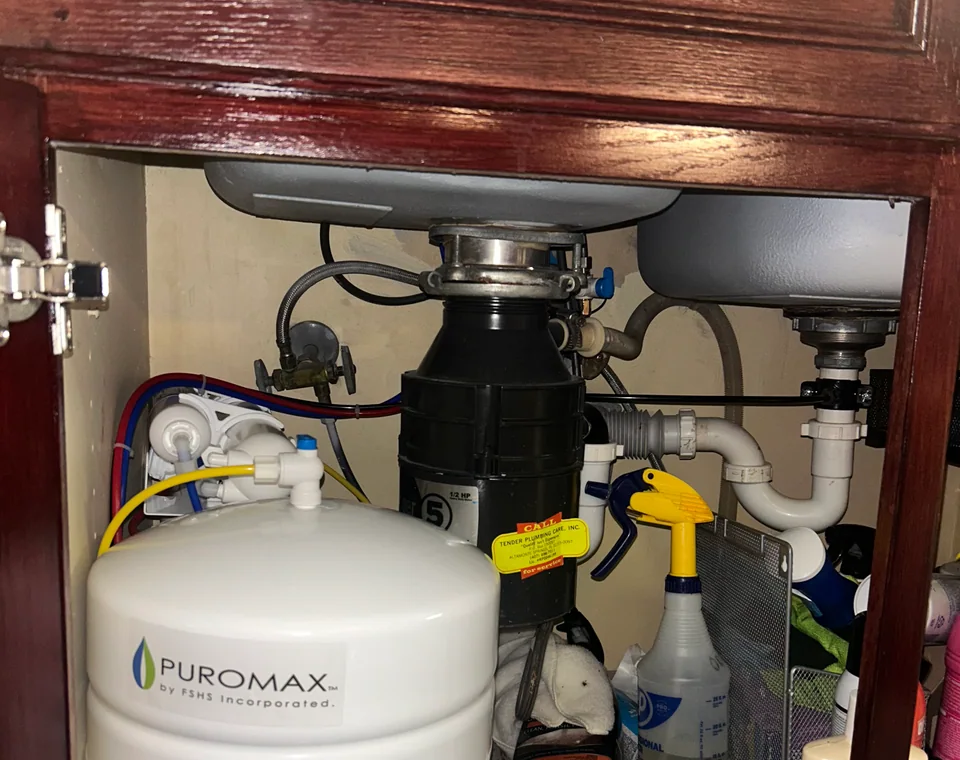
A trace detection is not the same as a therapeutic dose, a drinking-water violation, or proof of a health effect. It still deserves context. Look at where the compound came from, compare the measured level with a credible benchmark, and judge treatment by the exact claims certified for that model.
How pharmaceuticals reach the water cycle
Medicines can enter wastewater after the body metabolizes and excretes them. Other pathways include:
- Improper disposal down sinks or toilets
- Hospitals and healthcare facilities
- Pharmaceutical manufacturing
- Veterinary and agricultural use
- Landfill leachate
- Septic systems
- Reuse or recharge of treated wastewater
Wastewater treatment plants are designed primarily to control pathogens, solids, nutrients, and conventional pollutants. They can reduce many pharmaceutical compounds, but they were not all designed to remove every modern medication at every trace concentration.
Source-water conditions differ by region. A study from another state, a surface-water system, or South Florida does not prove that the same compound is present at the same level in an Orlando-area utility.
Trace concentration is not the same as dose
Pharmaceuticals in water are commonly measured in nanograms per liter. One nanogram is one-billionth of a gram.
EPA notes that low levels measured in drinking water or source water do not necessarily indicate a health risk. In April 2026, the agency released 374 non-enforceable Human Health Benchmarks for Pharmaceuticals, with separate values for the general population and infants. The benchmarks are screening tools for compounds without drinking-water standards, not enforceable maximum contaminant levels. (EPA Human Health Benchmarks)
A useful evaluation asks:
- Which compound was detected?
- At what concentration?
- Was the result in source water, finished water, or wastewater?
- What laboratory method and reporting limit were used?
- Is there an EPA benchmark or another authoritative screening value?
- Was the compound detected once or consistently?
A headline that says "pharmaceuticals were found" without that context is not enough to describe risk.
What public utilities test and report
Public water systems test for contaminants required under federal and state drinking-water rules. They also participate in EPA's Unregulated Contaminant Monitoring Rule when applicable, helping the agency gather nationwide occurrence data for substances that do not yet have national standards.
Many pharmaceuticals do not have individual federal drinking-water limits. EPA's 2026 benchmark program gives states, public-health officials, water systems, and the public a way to decide whether a measured level deserves additional monitoring or investigation.
Your annual Consumer Confidence Report remains the first place to review regulated water quality. Utility websites, UCMR results, and source-water studies can add context for unregulated compounds.
Are pharmaceuticals a Central Florida problem?
Florida's growing population, extensive use of groundwater, wastewater reuse, septic systems, and interconnected water cycle make pharmaceutical research relevant. Researchers have detected some pharmaceutical compounds in Florida aquatic environments and source waters.
But local conclusions require local data. The presence of a compound in a canal, wastewater effluent, or research sample does not establish the concentration at a particular home's faucet.
For a property-specific question, use current utility data or a qualified laboratory with a method suited to the target compounds. A basic in-home water test cannot detect trace pharmaceuticals.
What treatment technologies can reduce pharmaceuticals?
No household system should be sold as removing "all medications."
Performance depends on the compound and the exact treatment process.
Activated carbon
Carbon can adsorb many organic compounds, including some pharmaceuticals. Results depend on carbon type, contact time, competing organics, flow, and replacement interval.
Reverse osmosis
RO can reduce many dissolved compounds, but performance varies by molecule, membrane, pressure, pretreatment, and system condition.
Advanced utility treatment
Utilities and water-reuse facilities may use ozone, advanced oxidation, activated carbon, membranes, or other processes. Household equipment is not directly comparable with a full-scale advanced treatment plant.
What NSF/ANSI 401 means
NSF/ANSI 401 is a voluntary certification standard for up to 15 specific emerging compounds detected at trace levels, including several prescription and over-the-counter medications.
The current list includes compounds such as:
- Atenolol
- Carbamazepine
- Meprobamate
- Phenytoin
- Trimethoprim
- Ibuprofen
- Naproxen
- Estrone
A product certified under NSF/ANSI 401 is certified only for the specific claims in its listing. It is not certified for every pharmaceutical used in the United States. (NSF emerging-contaminant guidance)
When comparing products, verify:
- Exact model number
- Exact compounds in the certified claim
- Rated capacity
- Flow rate
- Replacement interval
- Whether the certification applies to the finished system
Point-of-use is often the focused approach
When the homeowner's concern is ingestion, a certified under-sink filter or RO system treats the water used for drinking and cooking. It can be easier to verify and maintain than treating every gallon entering the home.
Whole-home treatment may be appropriate for a separate goal such as chlorine taste or odor, but a broad whole-home marketing claim should not replace compound-specific evidence.
What households can do beyond filtration
Use medication take-back programs
EPA recommends using drug take-back options when available. Do not routinely flush medicines unless the label or FDA's flush list specifically instructs it. Keeping unused medication out of drains helps reduce environmental release. (EPA disposal guidance)
Read the utility's current report
Start with the actual water provider rather than a national headline.
Avoid unsupported testing claims
Trace pharmaceutical analysis generally requires specialized laboratory methods. A sales demonstration cannot prove their presence or absence.
Maintain any treatment system
An expired carbon cartridge or neglected RO membrane cannot be assumed to perform as originally tested.
Questions a treatment company should answer
Ask us these questions when you compare treatment:
- Is there local evidence for the compound of concern?
- Is the goal broad taste improvement or a specific reduction claim?
- Which standard and certified model apply?
- How much water needs treatment?
- What maintenance preserves performance?
- What is not covered by the claim?
That is more meaningful than a list of medication names on a brochure.
Frequently asked questions
Are there federal limits for pharmaceuticals in drinking water?
Most pharmaceuticals do not have individual enforceable federal drinking-water limits. EPA released non-enforceable health benchmarks for 374 pharmaceuticals in 2026 to support screening and further investigation.
Does a detection mean the water is unsafe?
Not automatically. Concentration, exposure, toxicology, and the applicable benchmark matter. EPA specifically notes that low-level detections do not necessarily indicate a health risk.
Does reverse osmosis remove every pharmaceutical?
No universal claim is justified. Verify the exact model's certified reductions and maintain the system correctly.
What does NSF/ANSI 401 certify?
It allows certification for reduction of up to 15 named emerging compounds, including some medications, pesticides, and industrial chemicals. The exact claims vary by product.
Should unused medicine be flushed?
Use an authorized take-back location when possible. Flush only when the product is on FDA's flush list or its instructions specifically direct you to do so.
Official sources
- EPA - Human Health Benchmarks
- EPA - 2026 Human Health Benchmarks for Pharmaceuticals
- NSF - Emerging Drinking-Water Contaminants and NSF/ANSI 401
- NSF - NSF/ANSI 42, 53, and 401 Standards
- EPA - Household Medication Disposal
- USGS - Pharmaceuticals and Other Chemicals in Water Research
About this guide: Utility programs, regulations and equipment specifications can change. Treatment performance depends on the water, system design, certified reduction claims and maintenance.