Is My Well Water Safe After Heavy Rain?
If floodwater reached your well, don’t drink it until it’s checked and tested. Here’s what to look for, what to test and how to plan treatment once the well is cleared.
Also asked: What Does Florida’s Limestone Do to My Water? · Do I Need Whole-Home Reverse Osmosis?
Check the well, then the water
In this guide
The short answer
Not until you know. If floodwater reached the wellhead or the water changed, use bottled water for drinking and cooking, call your county health department or a licensed well contractor, and test before going back to normal use. Once the well is cleared, use the results to plan treatment for the everyday problems.
If floodwater reached the well
Floodwater can carry bacteria and other contamination into a well. Switch to bottled water for drinking and cooking. Florida DOH and CDC have specific steps for flooded wells, including disinfection and lab testing. Follow them before you use the water normally again.
Look for damage and changes
Check for water around the wellhead, a damaged cap, exposed wiring, or a change in color, odor or clarity. Tell your well professional what you see. Don’t rely on taste: bacteria and nitrate don’t announce themselves.
Test for the right things
Florida DOH recommends testing private wells for bacteria and nitrate at least once a year, and again after flooding, repairs or a change in the water. Use the lab’s containers and instructions, and tell the lab about the storm, any repairs and any treatment equipment.
Check your treatment equipment
Floodwater and well disinfection can affect cartridges, membranes and other treatment parts. Have them checked when the well is restored. A softener handles hardness. It isn’t well disinfection.
Keep a short record
- When the flooding or change started
- Whether water reached the wellhead
- Any repair or disinfection work
- Lab dates and results
Photos and a timeline help your well contractor, and give us what we need to plan treatment later.
Plan treatment once it’s cleared
Well water in Central Florida often brings hardness, iron, odor or sediment. Once the well is cleared for normal use, send us your lab results and the problems you notice. We’ll design filtration and softening around your actual water, and add RO at the kitchen sink for drinking water. For an active flooded-well problem, start with the health department.
How we plan well-water treatment
Well water needs a plan built from your results. We size filtration and softening around your lab report and add RO at the kitchen sink.
HydroOne or HydroDuo
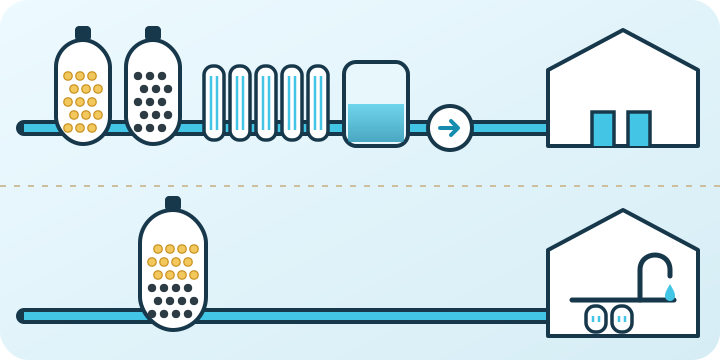
Catalytic carbon, KDF and 10% cross-linked softening resin treat the water where it enters your home, so every shower, sink and appliance gets filtered, soft water.
See HydroOne →HydroSip RO
Four-stage reverse osmosis under the sink with its own faucet, for drinking water, coffee, cooking and ice.
See HydroSip →Want RO at every tap? We install Hydro360 whole-home reverse osmosis too. For most homes, filtration and softening plus kitchen RO is the better value: the same drinking water at the sink, without paying to purify the water you shower, flush and wash with. See Hydro360
Questions homeowners ask
Can I boil my well water after a flood?
Follow your health department’s instructions. Boiling addresses germs, not chemicals such as nitrate or fuel.
How soon can I test?
Your health department or lab will tell you when and how to sample after disinfection.
Will a softener make my well water safe?
No. A softener removes hardness. Safety starts with inspection, disinfection and testing.
Sources
About this guide: We check our guides against current EPA, CDC, state and utility sources and update them as rules and equipment change.