Water Softener, Whole-Home Filter, or Reverse Osmosis?
A water softener removes hardness. A whole-home filter treats water as it enters the house. Under-sink reverse osmosis provides drinking water at a dedicated tap. Here’s how they work together.
That distinction matters in Central Florida, where a homeowner may be dealing with mineral scale, chlorine taste, dry-feeling skin, cloudy glassware, or concerns about drinking water - sometimes all at once. Buying equipment by category name alone can lead to disappointment because no single system solves every issue.
Tell us what you want to change. We’ll test hardness and disinfectant levels and explain which treatment fits. Specific contaminant concerns need the appropriate laboratory test.
What do you want your water to do better?
Before comparing equipment, separate the concern into one or more of these categories:
- Hardness and scale: white crust around faucets, spots on glass, soap that does not lather well, or mineral buildup in water-using equipment
- Taste and odor: chlorine, chloramine, musty, earthy, metallic, or sulfur-like characteristics
- Drinking-water preference: a desire for lower dissolved solids or certified reduction of specific contaminants at the kitchen tap
- Private-well or property-specific concerns: iron, manganese, sulfur, bacteria, nitrates, arsenic, or another issue that requires laboratory testing and a purpose-built design
A free in-home assessment can help with measurable conditions such as hardness and disinfectant residual. It cannot replace a certified laboratory when the concern is lead, PFAS, bacteria, pesticides, or another contaminant that requires specialized analysis.
What a water softener does
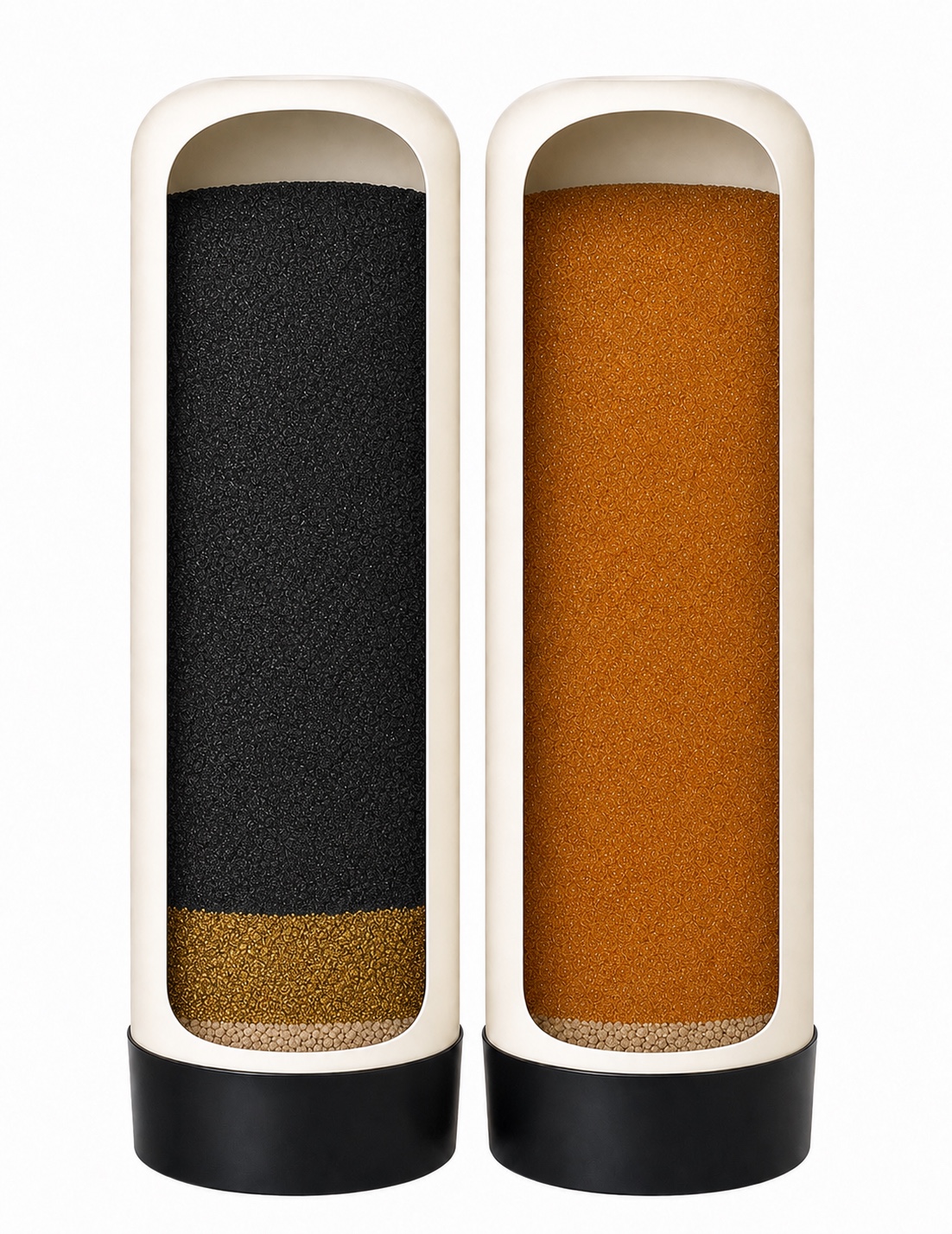
A conventional cation-exchange water softener removes the calcium and magnesium ions that create hardness. The resin exchanges those minerals for sodium or potassium ions and periodically regenerates with salt.
A softener is the most direct option when the homeowner wants to address:
- Mineral scale
- Soap and detergent performance
- Spotting caused primarily by hardness
- Buildup in water heaters and other water-using equipment
- The slicker feel associated with truly softened water
NSF/ANSI 44 is the principal certification standard for residential cation-exchange water softeners. Certification can address material safety, structural integrity, softening capacity, pressure drop, brine-system accuracy, and other performance requirements. Always verify the exact listed model rather than relying on a generic certification logo. (NSF/ANSI 44 overview)
What a softener does not do
A standard softener should not be presented as a universal contaminant filter. It is not the primary treatment for chlorine taste, PFAS, pharmaceuticals, microplastics, or most dissolved organic chemicals.
It may be one part of a combined system, but its main job is hardness removal.
What a whole-home filter does
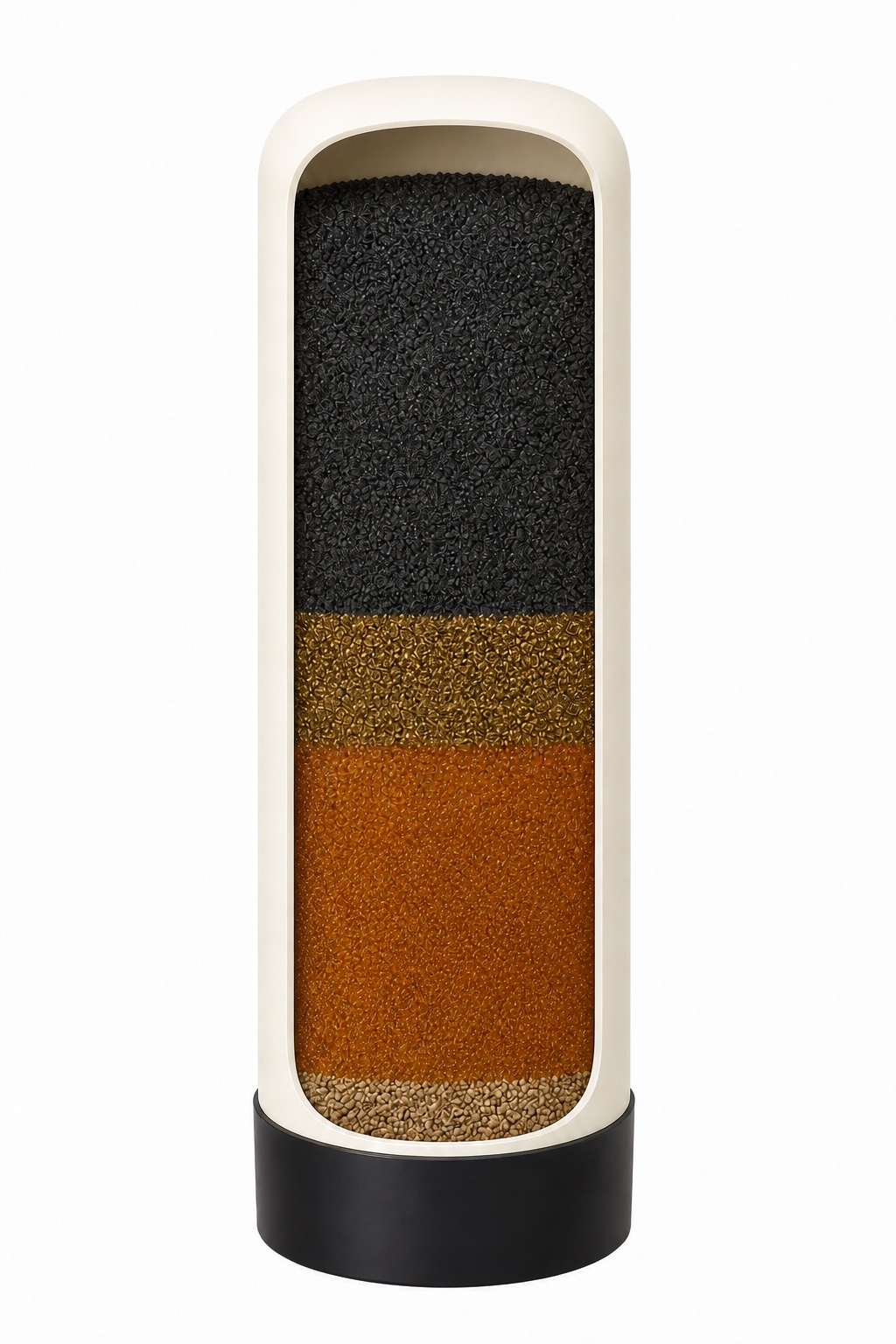
A whole-home filter treats water as it enters the property. The result depends entirely on the media, tank size, flow rate, contact time, water chemistry, and maintenance schedule.
Carbon-based filtration is commonly used for:
- Chlorine taste and odor
- Certain organic compounds when the exact system has a documented reduction claim
- Improving the sensory quality of water used for bathing, laundry, and household use
Chloramine can require more contact time and a different carbon design than free chlorine. A small carbon cartridge and a properly sized whole-home catalytic-carbon system should not be treated as equivalent.
A whole-home carbon filter does not remove hardness unless the system also contains a true softening stage. It can improve taste and odor while leaving the calcium and magnesium unchanged.
NSF/ANSI 42 covers aesthetic claims such as chlorine, taste, and odor. NSF/ANSI 53 covers specific health-related reduction claims. A product may be certified for one claim and not another, so check the exact model and claim in the certification listing. (NSF filtration standards)
What reverse osmosis does
Reverse osmosis, or RO, pushes water through a semipermeable membrane. A typical under-sink system treats water for a dedicated drinking-water faucet and may include sediment and carbon prefilters, the RO membrane, a storage tank, and a polishing filter.
RO is often the most focused option when the goal is:
- Lower dissolved solids at the kitchen tap
- Drinking and cooking water with a different taste profile
- Reduction of a specific contaminant supported by the exact model's certification
- An alternative to carrying bottled water for everyday use
NSF/ANSI 58 covers reverse-osmosis systems and can include claims for total dissolved solids and specific contaminants. The claim belongs to the exact certified model and configuration. A membrane component alone does not certify an assembled system for every contaminant.
Point-of-use versus whole-home RO
Under-sink RO is designed for drinking and cooking water. Whole-home RO is a much larger engineered system that can require pretreatment, membranes, storage, repressurization, drainage, service space, and ongoing maintenance.
Whole-home RO is not automatically better. It is usually reserved for properties with a verified water condition and a reason to treat every gallon at that level.
Compare the three treatment paths
| Primary goal | Treatment that usually deserves evaluation | What it does not automatically solve |
|---|---|---|
| Remove hardness and create truly soft water | Ion-exchange water softener | Chlorine, PFAS, most organics, drinking-water polishing |
| Improve whole-home chlorine taste or odor | Properly sized carbon filtration | Hardness unless a softening stage is included |
| Improve drinking and cooking water at one tap | Point-of-use reverse osmosis | Does not treat showers, laundry, or the rest of the home |
| Address both hardness and disinfectant goals | Combined softening and filtration | Only the documented functions of each stage |
| Treat a verified private-well contaminant | Laboratory-guided custom treatment | No universal well-water solution exists |
When a combined system makes sense
Many Central Florida homes have more than one goal. A homeowner may want true soft water throughout the house and separately want filtered RO water for drinking and cooking.
A combined design might include:
- Whole-home carbon filtration for an identified disinfectant goal
- Ion-exchange softening for hardness
- Point-of-use RO at the kitchen sink
The stages must be sized and ordered for the actual water chemistry and flow. More tanks do not automatically mean a better system. The question is whether each component has a clear job.
Questions to ask before buying
- What problem is this specific component intended to solve?
- What test result or utility information supports the recommendation?
- Is the finished model independently certified for the claim being made?
- What flow rate and pressure drop should I expect?
- What media, cartridges, salt, or membranes must be replaced?
- What are the annual operating and service costs?
- Who installs and services the system?
- What will remain unchanged after treatment?
A seller should be able to answer those questions without relying on universal removal claims or absolute purity claims.
Frequently asked questions
Can one system soften and filter water?
Yes, some configurations combine multiple treatment functions. The important question is whether the system includes a true ion-exchange softening stage and whether each filtration claim is documented for the exact configuration.
Does reverse osmosis replace a water softener?
Usually not. Under-sink RO treats a limited amount of drinking and cooking water. A softener treats hardness throughout the home. In hard-water areas, softening can also help protect the RO membrane and reduce scale in household equipment.
Does a carbon filter remove calcium and magnesium?
No. Standard carbon filtration does not remove the dissolved minerals that create hardness.
Should every home have whole-home reverse osmosis?
No. Whole-home RO adds equipment, water use, maintenance, storage, and cost. It should be evaluated for a verified need, not treated as the default upgrade.
Official sources
- NSF - NSF/ANSI 44 Technical Requirements
- NSF - NSF/ANSI 42, 53, and 401 Filtration Standards
- EPA WaterSense - Cation Exchange Water Softeners
- CDC - About Home Water Treatment Systems
About this guide: Utility programs, regulations and equipment specifications can change. Treatment performance depends on the water, system design, certified reduction claims and maintenance.