
How to Tell Whether Your Water Softener Has Stopped Working
A water softener usually does not fail with one dramatic event. Most homeowners first notice the return of familiar hard-water symptoms: white crust, cloudy glassware, soap that rinses differently, or a shower door that becomes harder to clean.
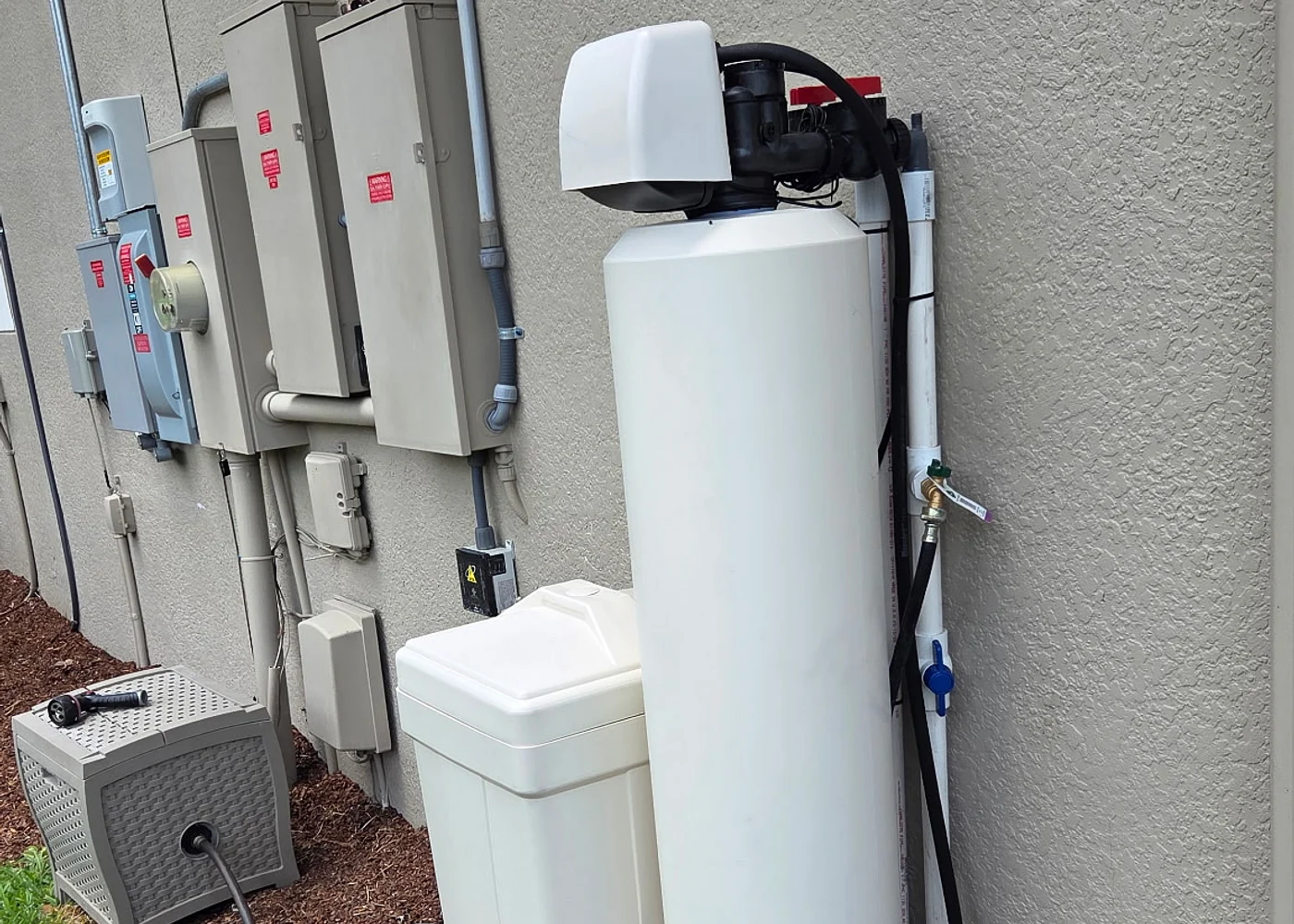
Those symptoms are useful clues, but they do not prove the softener is the cause. A changed utility source, an empty brine tank, a bypass valve, a plumbing change, or ordinary residue can create similar complaints.
The fastest way to know is to compare hardness before and after the system and then inspect the basic operating conditions.
Signs the softener may not be working
Hardness is present after the softener
A hardness test at a treated cold-water tap is the clearest first check. If the incoming water is hard and the treated water shows similar hardness, the system is not softening effectively.
Use a tap that is definitely supplied by the softener. Some kitchen cold-water lines, outdoor faucets, refrigerator lines, or additions may be intentionally bypassed.
Scale and white crust are returning
Mineral buildup around aerators, showerheads, glass, and appliance heating elements can indicate hardness breakthrough. Remember that existing scale does not disappear immediately when a softener is repaired, and some spotting can come from dissolved solids that remain after softening.
Soap behavior changes
Hard water interferes with soap lather and can leave residue. If soap suddenly behaves as it did before the softener was installed, that is another reason to test the water.
The salt level never changes
If the brine tank remains at exactly the same level for months, the system may not be regenerating, may not be drawing brine, or may have a salt bridge.
Salt use becomes unusually high
A sudden increase can come from excessive regeneration, a water leak, an incorrect hardness setting, a meter problem, or a valve that is not completing its cycle correctly.
The control valve shows an error or wrong time
A power interruption can reset some valves. An incorrect clock can cause regeneration at an inconvenient time, while a displayed error may point to a motor, sensor, or valve-position problem.
Water pressure drops
A significant pressure change can be related to fouled resin, a clogged prefilter, a valve problem, plumbing restrictions, or a different issue elsewhere in the home. Do not assume the resin tank is the cause without checking the rest of the system.
Safe checks a homeowner can make
Confirm the system has power
Check the display and outlet. If the outlet is on a GFCI circuit, confirm it has not tripped. Do not open the valve head or electrical components unless you are qualified to service the equipment.
Check the bypass position
A softener left in bypass sends untreated water around the resin tank. Confirm the handles or bypass assembly are in the normal service position according to the manufacturer's instructions.
Look at the salt level
The brine tank needs enough salt to make brine, but filling it to the top is not always necessary. Check for a hard crust that looks full on top while an empty cavity exists underneath.
EPA advises homeowners to watch for salt bridges and break them carefully with a broom handle or similar rigid tool. Do not strike the tank, use a sharp object, or damage the brine well. (EPA WaterSense home-maintenance guidance)
Check for standing-water abnormalities
A few inches of water in the bottom of many brine tanks can be normal. A tank filled unusually high, overflowing, or completely dry when it should have refilled can indicate a float, injector, drain, valve, or programming issue.
Review the hardness setting
The incoming hardness programmed into the valve should reflect current water conditions. Do not raise the setting randomly to force more regeneration. First measure the water and confirm whether iron or another factor must be included.
Look for leaks and unexpected use
A running toilet can consume hundreds of gallons and exhaust softening capacity. Check whether outdoor fixtures, irrigation, a pool fill, or a new plumbing branch are routed through the system.
A simple hardness comparison
Test three locations when practical:
- Untreated source: an outdoor or pre-softener tap that is known to bypass the system
- Treated cold water: a tap definitely supplied by the softener
- Problem location: the fixture where the homeowner notices the issue
Results can reveal whether the problem is the softener, the plumbing route, or one fixture.
A color-strip test is useful for screening. A drop-count titration test generally provides a more precise grains-per-gallon result. For a health-related contaminant, use the appropriate certified laboratory rather than a hardness kit.
When to request service
Call for professional service when:
- Treated water remains hard after a manual regeneration
- The system does not draw brine
- The brine tank overfills
- The valve leaks or displays repeated errors
- The drain runs continuously
- Pressure remains low after checking simple upstream filters
- Resin appears in plumbing fixtures
- The system is more than several years old and has never been inspected
- Water quality changed after utility work, a well event, or major plumbing changes
A technician may inspect the injector, brine line, float, drain flow control, piston or seals, flow meter, programming, resin condition, and bypass assembly.
Do not confuse these problems with softener failure
Chlorine taste or odor
A water softener is not the primary treatment for chlorine or chloramine. If the hardness is low but disinfectant taste remains, the softener may be working correctly.
High total dissolved solids
A softener exchanges ions; it does not significantly lower total dissolved solids. A TDS meter may show a similar or slightly higher number after softening even when hardness has been removed.
Water spots after softening
Softened water can still leave spots from sodium salts or other dissolved solids after evaporation. They are usually easier to wipe away than hard mineral scale.
Low pressure from a clogged cartridge
If the home has a sediment or carbon prefilter, the cartridge may be the restriction rather than the softener.
Preventive maintenance
EPA recommends:
- Checking salt periodically
- Watching for salt bridges
- Cleaning the brine tank annually
- Programming regeneration from hardness and metered flow
- Having the system professionally serviced about once a year
- Bypassing the softener for water-intensive uses that do not need soft water when the plumbing allows it
A brief annual check is less expensive than waiting until months of hard-water scale return.
Frequently asked questions
Can I force a manual regeneration?
Most metered valves allow it, but follow the manufacturer's instructions. A manual regeneration can help diagnose a low-capacity condition, but repeated regenerations will not fix a blocked injector, failed valve, salt bridge, or exhausted resin.
Why is my brine tank full of water?
Possible causes include a blocked injector, kinked drain, malfunctioning float, control-valve problem, or incorrect refill setting. If the level is unusually high or overflowing, place the unit in bypass if needed and request service.
How long does softener resin last?
There is no universal life. Chlorine exposure, iron, sediment, flow, regeneration, resin quality, and maintenance all affect it. A performance test is more useful than replacing resin solely by age.
Should treated water test at zero hardness?
A properly operating conventional softener often tests at or near zero grains per gallon immediately after treatment, but test precision, blending valves, plumbing bypasses, and system settings can affect the result.
Can a power outage stop the softener from working?
It can disrupt the clock or regeneration schedule on some controls. Many metered valves retain programming, but the time and status should be checked after an outage.
Official sources
- EPA WaterSense - Home Maintenance and Water-Softener Tips
- EPA WaterSense - Cation Exchange Water Softeners
- NSF - NSF/ANSI 44 Technical Requirements
About this guide: Utility programs, regulations and equipment specifications can change. Treatment performance depends on the water, system design, certified reduction claims and maintenance.