
What Does It Really Cost to Run a Water Softener in Central Florida?
Running a water softener means paying for salt, regeneration water, a small amount of electricity, and periodic service or cleaning. Here’s how to estimate those costs for your home.
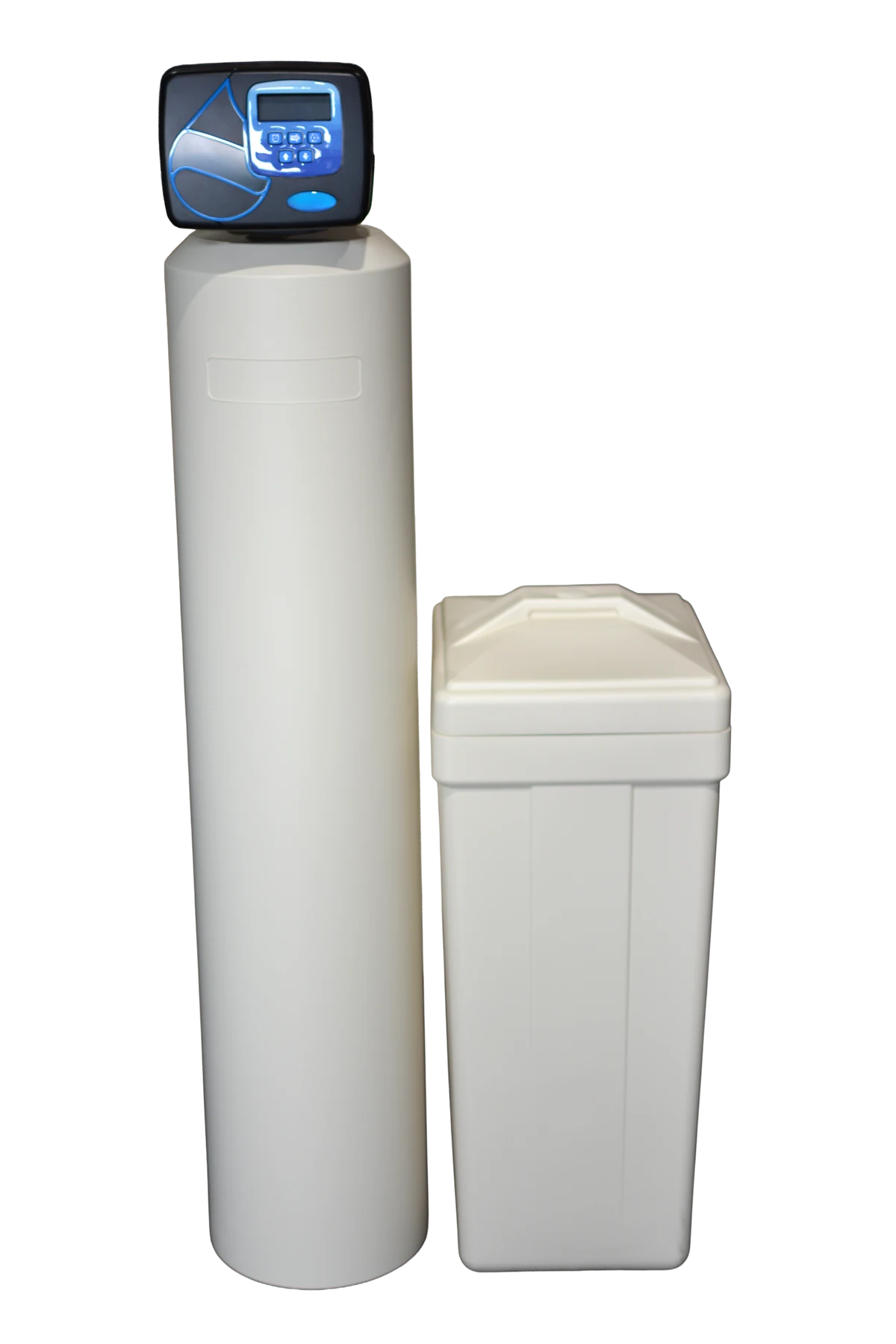
The exact cost depends on four things: the home's water hardness, household water use, the softener's programmed capacity, and how efficiently it regenerates.
Use those numbers to estimate salt use. Every household is different.
The four ongoing costs
Salt
A cation-exchange softener periodically uses sodium chloride or potassium chloride to recharge the resin. Salt use changes with hardness, household demand, and the efficiency setting.
Regeneration water
During regeneration, the system backwashes, draws brine, rinses the resin, and refills the brine tank. Older or poorly programmed systems can use considerably more water than modern demand-initiated equipment.
Electricity
Most residential control valves use a small amount of electricity to run the timer, meter, display, and valve motor. This is normally a minor part of the annual cost.
Maintenance
Maintenance may include brine-tank cleaning, checking the injector and drain line, verifying hardness settings, inspecting seals, and confirming that the meter and regeneration cycle work correctly.
EPA recommends professional service about once a year and advises homeowners to watch for salt bridges, clean the brine tank annually, and program regeneration from actual hardness or metered flow rather than an arbitrary fixed schedule. (EPA WaterSense home-maintenance guidance)
Estimate your annual salt use
Start by estimating how many grains of hardness the softener must remove each year.
Annual hardness load = people x gallons used per person per day x 365 x grains per gallon of hardness
Consider a four-person household using an estimated 60 gallons per person per day with water at 8 grains per gallon:
- 4 people x 60 gallons x 365 days = 87,600 gallons per year
- 87,600 gallons x 8 grains per gallon = 700,800 grains of hardness per year
If the system delivers approximately 3,500 grains of hardness removal per pound of salt:
- 700,800 / 3,500 = about 200 pounds of salt per year
- That is approximately five 40-pound bags
This is an illustration, not a household guarantee. Actual water use, reserve capacity, iron, system settings, leakage, and regeneration behavior can move the result substantially.
Estimate regeneration water
EPA's current consumer guidance says efficient replacement systems should use about 4 gallons of regeneration water or less per 1,000 grains of hardness removed and achieve at least 3,500 grains of hardness removal per pound of salt. A separate EPA consumer page recommends looking for no more than 5 gallons per 1,000 grains and more than 3,350 grains per pound, so verify the specific model's current rated data. (EPA home maintenance; EPA other water-efficient products)
Using the 700,800-grain example at 4 gallons per 1,000 grains:
- 700.8 x 4 gallons = about 2,803 gallons of regeneration water per year
Multiply that by the applicable local water and sewer rates to estimate the utility cost. Some communities bill sewer charges based on water use, so the cost per gallon may include both.
Why two similar homes can use different amounts of salt
The hardness setting is wrong
If the valve is programmed above the actual hardness, the system may regenerate too often. If it is set too low, hard water may break through before regeneration.
The system regenerates by calendar instead of demand
A time-clock system may regenerate even when the household has used very little water. A demand-initiated system measures usage and regenerates when the remaining capacity reaches a programmed threshold.
The system is oversized or poorly configured
A very large tank is not automatically more efficient. Capacity, salt dose, reserve, and expected flow must work together.
There is hidden water use
A leaking toilet, irrigation connection, pool fill, or outdoor hose bib routed through the softener can consume capacity rapidly.
The household changed
Guests, a new family member, remote work, or a change in laundry habits can alter demand. So can an empty home or extended travel.
Iron or another condition consumes capacity
Private wells can contain dissolved iron or manganese that changes sizing and cleaning requirements. Sunstorm Home serves municipal-water homes; well owners should use laboratory testing and a well-specific treatment design.
Sodium chloride versus potassium chloride
Potassium chloride can regenerate many conventional softeners, but it usually costs more and may require a different program setting or salt dose. It should not be treated as a universal medical substitute for sodium chloride. Anyone managing kidney disease, heart disease, potassium intake, or a medically restricted diet should ask a healthcare professional before changing regenerants or drinking-water arrangements.
How to reduce operating cost without sacrificing performance
- Use a demand-initiated metered control valve.
- Program the actual measured hardness.
- Use an efficient salt setting supported by the manufacturer's capacity data.
- Keep irrigation, pool filling, and other high-volume nonessential uses off softened water when practical.
- Repair leaks.
- Maintain an appropriate salt level without overfilling the brine tank.
- Break up salt bridges safely.
- Clean the brine tank and inspect the system on schedule.
- Retest hardness after utility changes, moving to a different water source, or major plumbing work.
What to ask for in a proposal
A transparent proposal should identify:
- Measured hardness in grains per gallon
- Household size and estimated water use
- Tank and resin capacity
- Programmed salt dose
- Rated salt efficiency
- Rated regeneration-water efficiency
- Expected regeneration frequency
- Salt type
- Recommended maintenance
- Estimated annual consumables
If the salesperson cannot explain the estimate, the annual operating-cost number is probably not meaningful.
Frequently asked questions
How often should I add salt?
There is no universal schedule. Check the salt level regularly and add salt before it becomes too low for reliable brine production. Actual use depends on hardness, household demand, and settings.
Is a more frequent regeneration always better?
No. Unnecessary regeneration wastes salt and water. The goal is to regenerate before hardness breaks through, based on actual capacity and usage.
Does a water softener raise the electric bill noticeably?
The control valve generally uses little electricity. Salt, regeneration water, and maintenance are normally the larger operating considerations.
Can I bypass the softener for irrigation?
Often yes, and EPA recommends bypassing water-intensive activities that do not need soft water when practical. The plumbing design must provide the appropriate untreated connection.
Why did my salt use suddenly increase?
Possible causes include a leak, changed household use, an incorrect setting, a stuck valve, a brine problem, or an outdoor fixture being supplied through the system. A service check can identify the cause.
Official sources
- EPA WaterSense - Home Maintenance and Water-Softener Tips
- EPA WaterSense - Other Water-Efficient Products
- EPA WaterSense - Cation Exchange Water Softeners
- NSF - NSF/ANSI 44 Technical Requirements
About this guide: Utility programs, regulations and equipment specifications can change. Treatment performance depends on the water, system design, certified reduction claims and maintenance.