
Trihalomethanes and Disinfection By-Products in Drinking Water
Chlorine and chloramine protect drinking water from dangerous microorganisms as it moves through a utility system. When those disinfectants react with naturally occurring organic material, they can form a group of compounds called disinfection by-products, or DBPs.
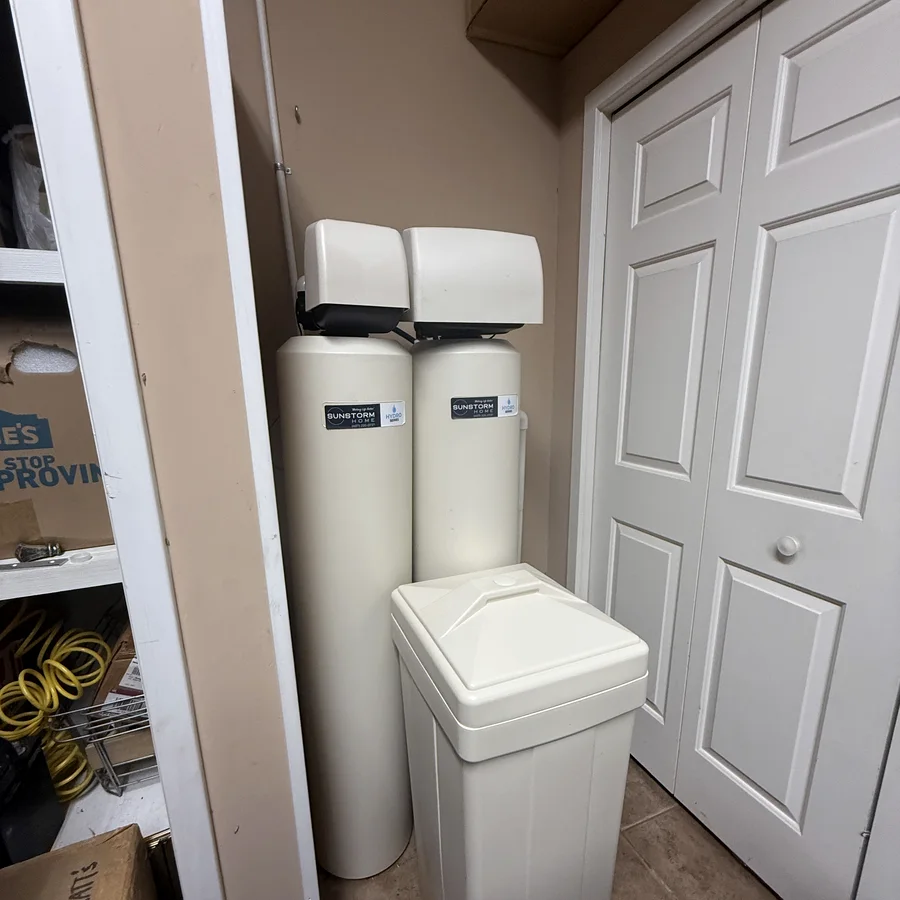
Two regulated groups appear frequently in water-quality reports: total trihalomethanes, or TTHM, and five haloacetic acids, or HAA5.
Check your utility’s actual results and how compliance is calculated. If you want additional treatment, look for a specific certified reduction claim. A detectable DBP result does not automatically mean the utility is violating a standard, and a chlorine test at the kitchen tap does not measure trihalomethanes.
Why utilities disinfect water
Untreated source water can contain bacteria, viruses, and parasites capable of causing acute illness. Utilities add disinfectants to inactivate microorganisms and maintain a protective residual through the distribution system.
CDC states that chlorine or chloramine levels up to 4 milligrams per liter are considered safe in drinking water. Chloramine lasts longer in pipes and generally forms fewer regulated DBPs than free chlorine, although each disinfectant has advantages and operational tradeoffs. (CDC chlorine and chloramine guidance)
Disinfection is a fundamental public-health protection. The goal of DBP regulation is to control long-term exposure without compromising microbial safety.
How DBPs form
DBP formation is influenced by:
- Type and dose of disinfectant
- Amount and character of natural organic matter
- Temperature
- pH
- Bromide in the source water
- Time water spends in the distribution system
- Storage tanks and seasonal demand
- Location within the utility system
A sample from one part of a service area can differ from another. Warm Florida conditions and longer residence time can affect formation, which is why utilities monitor at locations selected to represent higher-risk points in the distribution system.
The main regulated groups
Total trihalomethanes
TTHM is the sum of four compounds:
- Chloroform
- Bromodichloromethane
- Dibromochloromethane
- Bromoform
EPA's maximum contaminant level for TTHM is 0.080 milligram per liter, equivalent to 80 micrograms per liter or 80 parts per billion.
Five haloacetic acids
HAA5 is the sum of five haloacetic acids. EPA's maximum contaminant level is 0.060 milligram per liter, equivalent to 60 micrograms per liter or 60 parts per billion.
EPA's Stage 1 and Stage 2 Disinfectants and Disinfection Byproducts Rules control these and other by-products while preserving protection from microbial pathogens. (EPA DBP rules)
How to read DBP results in a water-quality report
Your Consumer Confidence Report may show:
- The regulated contaminant group
- The highest locational running annual average
- The range of individual sample results
- The maximum contaminant level
- Whether a violation occurred
- A plain-language source and health statement
Compliance is not always based on the single highest grab sample. Under the Stage 2 rule, utilities generally calculate locational running annual averages at monitoring sites. Read the table heading and footnotes before comparing one sample with the MCL.
Ask these questions:
- Is the value an individual result, range, average, or locational running annual average?
- Which year does the report cover?
- Did the utility report a violation?
- Was there a seasonal change or treatment notice?
- Does the result apply to the correct water provider?
A compliant result means the utility met the applicable rule during the reporting period. A homeowner may still prefer additional treatment for taste, odor, or a lower personal exposure goal.
Chlorine testing is not DBP testing
An in-home chlorine or chloramine test can show disinfectant residual at the tap. It cannot determine TTHM or HAA5.
DBP testing requires laboratory sampling and analytical methods. Do not let a sales presentation imply that a color-change chlorine test proves the presence or absence of trihalomethanes.
Utility data is the first source. A homeowner considering independent DBP testing should use a laboratory qualified for the appropriate drinking-water methods and follow its sample-preservation instructions.
Can home treatment reduce DBPs?
Treatment depends on the compound and system design.
Activated carbon
Granular activated carbon can reduce many organic compounds, including certain trihalomethanes, when the system provides adequate media volume and contact time. Performance changes with flow, water chemistry, media age, and the exact compounds present.
For a health-related claim, look for the exact finished model's certification under NSF/ANSI 53. Some products may use a VOC reduction claim that includes specific trihalomethanes; verify the listing rather than assuming every carbon tank has the same tested performance.
Reverse osmosis
Point-of-use RO may reduce certain DBPs and other dissolved compounds depending on the membrane and carbon stages. Check the exact NSF/ANSI 58 and related claims for the model.
Aeration
Some trihalomethanes are volatile and can be reduced by aeration in engineered applications. Household performance depends on the design and should not be inferred from simply letting a glass sit on the counter.
Point-of-use or whole-home treatment?
Point-of-use
A certified drinking-water filter or RO system treats ingestion at the kitchen tap. It may be the most focused approach when drinking and cooking water are the primary concern.
Whole-home carbon
Point-of-entry carbon treats water used throughout the home and can also address chlorine taste and odor. It requires proper sizing for peak flow and adequate contact time.
Removing disinfectant at the point of entry also removes the protective residual from the home's plumbing. CDC notes that whole-home removal of chlorine can allow more germs to grow in plumbing if the system is not properly maintained. The equipment, plumbing, and service schedule should account for that tradeoff. (CDC home water-treatment guidance)
What maintenance matters
A carbon system cannot be assumed to work indefinitely.
Ask for:
- Media type and amount
- Service flow and peak flow
- Empty-bed contact time or other sizing basis
- Exact certified claims
- Expected capacity
- Replacement schedule
- Backwash requirements
- Pressure-drop data
- Sanitization and service procedure
- A plan for water quality if media is exhausted
An undersized system may improve odor while providing less contaminant reduction than the homeowner assumes.
Keep microbial safety first
DBP risk is generally associated with long-term exposure. Microbial contamination can create immediate illness.
Do not reduce or remove disinfectant without maintaining the treatment equipment and household plumbing. During a boil-water notice or other utility advisory, follow the official instructions even if the home has a filter or RO system.
How to make a treatment decision
- Identify the correct utility.
- Read the latest TTHM and HAA5 data and footnotes.
- Confirm whether the issue is compliance, taste, odor, or a personal treatment preference.
- Decide whether the goal is drinking water or the whole home.
- Verify the exact product certification and capacity.
- Include maintenance and media replacement in the cost.
- Do not confuse disinfectant residual with DBP concentration.
Frequently asked questions
Are trihalomethanes the same as chlorine?
No. Chlorine is a disinfectant. Trihalomethanes are by-products that can form when disinfectants react with naturally occurring material in water.
Can I smell TTHMs?
A chlorine-like odor does not measure TTHM concentration. Smell is not a reliable DBP test.
Does boiling remove trihalomethanes?
Some volatile compounds can be reduced by boiling, but boiling is not a complete or practical long-term DBP treatment strategy and does not address every haloacetic acid. Follow a verified treatment approach.
Does every carbon filter reduce DBPs?
No. Capacity, contact time, flow, media, and certification differ. Verify the exact model and claim.
Why might results vary during the year?
Temperature, organic matter, disinfectant dose, water age, source conditions, and location in the distribution system can all affect DBP formation.
Official sources
- EPA - Stage 1 and Stage 2 Disinfectants and Disinfection Byproducts Rules
- CDC - About Water Disinfection With Chlorine and Chloramine
- CDC - About Home Water Treatment Systems
- NSF - NSF/ANSI 42, 53, and 401 Filtration Standards
- CDC - How to Read Drinking Water Quality Reports
About this guide: Utility programs, regulations and equipment specifications can change. Treatment performance depends on the water, system design, certified reduction claims and maintenance.